

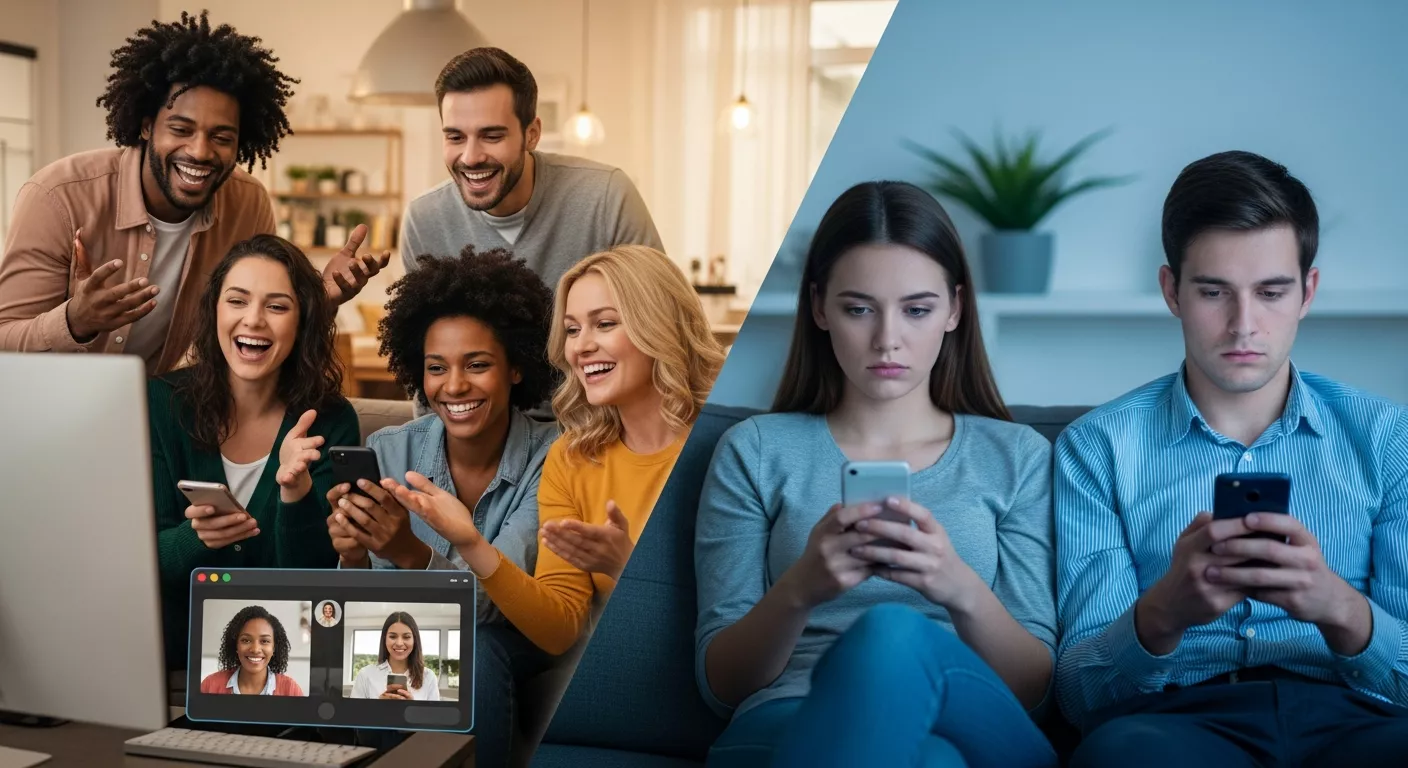
Social media improves communication but often weakens real relationships by increasing distraction, emotional dependency, and misunderstandings. It affects friendships, romance, and communication skills. Understanding these impacts helps people rebuild stronger face-to-face connections and maintain healthier digital boundaries in daily life.
We created social platforms to bring people closer together. A quick message, a shared photo, or a simple comment was supposed to bridge the gap between long distances and busy schedules. Instead, many people are finding that these digital tools are slowly pulling their closest relationships apart.
You might notice a friend who constantly checks their screen during dinner, or a partner who seems more interested in their online following than the conversation happening right in front of them. These small moments add up over time. They create invisible barriers between people who used to share deep, meaningful connections.
Understanding how social media affects relationships requires a hard look at our daily habits. The platforms are designed to keep us scrolling, liking, and commenting. This constant engagement often comes at the expense of the real people sitting next to us. When screen time replaces quality time, the foundation of any strong bond begins to crack.
How Social Media Changes Human Behavior
The platforms we use every day are built by engineers who understand human psychology. They know exactly how to trigger the reward centers in our brains. Every time you receive a notification, your brain releases a small dose of dopamine. This chemical reaction creates a cycle of seeking constant validation from peers, acquaintances, and strangers.
Over time, this need for digital approval shifts how we interact with the world. People start living their lives for the camera. A beautiful sunset is no longer just a moment to enjoy quietly. It becomes a piece of content to be captured, filtered, and uploaded. This constant need to document everything pulls people out of the present moment.
Social Media Influence on Emotions and Behavior
When our self-esteem gets tied to likes and shares, our emotions become highly unstable. A post that receives little attention can cause feelings of inadequacy or sadness. Conversely, a viral post might create a temporary high that quickly fades, leaving the user desperate for the next hit of validation.
This emotional rollercoaster spills over into real-life relationships. A person who feels ignored online might become irritable or withdrawn around their friends. They might snap at a partner for minor issues because they are carrying the stress of their digital life. The emotional toll of maintaining an online persona leaves little energy for nurturing actual human connections.
Effects of Social Media on Communication
Good communication is the bedrock of any successful relationship. It requires active listening, empathy, and the ability to read non-verbal cues like body language and tone of voice. Social networking platforms strip away all of these essential elements, leaving behind plain text and emojis.
Digital Communication vs Real Communication Differences
When you speak to someone in person, you exchange a massive amount of information. A slight hesitation before answering, a shift in posture, or a subtle change in eye contact can tell you exactly how a person is feeling. Digital communication lacks this depth. Text messages and comments are easily misinterpreted because they carry no tone.
A harmless joke sent via text might be read as a serious insult. A short reply like “okay” might be interpreted as anger or passive-aggression. These small misunderstandings frequently snowball into massive arguments. Friends stop speaking to each other over a perceived slight in a group chat. Partners fight over the specific wording of a direct message.
How Smartphones Affect Social Interaction
The mere presence of a smartphone can ruin a conversation. Studies have shown that simply having a phone resting on a table makes people feel less connected to their conversation partner. The phone acts as a constant reminder of the digital world, signaling that the current conversation could be interrupted at any second.
How smartphones affect social interaction is evident in almost every public space. Walk into a restaurant and you will see couples sitting across from each other, both staring silently at their glowing screens. They are physically occupying the same space, yet their minds are miles away. This phenomenon, often called “phubbing” (phone snubbing), sends a clear message to the other person: the digital world is more important than you are.
Why Social Networks Harm Friendships
Friendships thrive on shared experiences and mutual support. True friends are there for you during the messy, uncurated moments of life. Social networks, however, encourage a highly edited version of reality. People only post their successes, their vacations, and their happiest moments.
The Comparison Trap
When you constantly view the highlight reels of your friends’ lives, it is easy to feel like you are falling behind. You might see a friend post about a major promotion while you are struggling with a difficult job. You might see photos of a group outing that you were not invited to. This sparks feelings of jealousy, resentment, and insecurity.
Instead of feeling happy for a friend’s success, you might start comparing their achievements to your own. This comparison trap breeds toxicity. It becomes difficult to have an honest conversation about your struggles when everyone else appears to be living a perfect life. The friendship loses its authenticity.
Why People Become Distant Due to Social Media
Many people believe that following a friend online is the same as staying in touch. You see their updates, you like their photos, and you feel like you know what is going on in their life. Because of this false sense of connection, people stop making the effort to call or meet up.
Why people become distant due to social media comes down to this illusion of intimacy. Liking a status update takes half a second. It requires zero emotional investment. Real friendship requires time, effort, and vulnerability. When we substitute deep conversations with shallow digital interactions, our friendships slowly wither away from neglect.
The Impact of Social Networking on Daily Life and Romance
Romantic relationships are particularly vulnerable to the pitfalls of social networking. Trust, privacy, and dedicated attention are crucial for a healthy partnership. Social apps introduce a multitude of threats to these core pillars.
Jealousy and Trust Issues Online
Social platforms provide endless opportunities for suspicion. A partner might notice that their significant other frequently likes the photos of an attractive colleague. They might see a cryptic comment left by an ex-partner. These digital footprints often lead to anxiety and paranoia.
Instead of addressing the issue directly, a person might start monitoring their partner’s online activity. They check to see when the partner was last active, who they recently followed, and what they are commenting on. This surveillance behavior destroys trust. The relationship becomes a stressful game of playing detective, rather than a safe space built on mutual respect.
How Online Interaction Affects Real Relationships
The boundaries between private life and public life become blurred online. Couples often feel the pressure to perform their relationship for an audience. They post glowing tributes to each other and share intimate moments with hundreds of followers.
When a couple focuses too heavily on projecting a perfect image, they often neglect the actual health of their relationship. They might stage an elaborate date night just for the photos, while spending the rest of the evening ignoring each other. The relationship becomes a branding exercise. If the online validation stops, the couple might realize they have nothing real holding them together.
Reclaiming Face-to-Face Connections
Fixing these issues requires a conscious effort to change our digital habits. We have to recognize that technology is a tool, not a replacement for human connection. Rebuilding damaged relationships means stepping away from the screen and re-engaging with the physical world.
Why People Talk Less in Real Life Due to Phones
The convenience of digital messaging has made people lazy. Why go through the effort of arranging a coffee date when you can just send a quick text? Why people talk less in real life due to phones is largely a matter of taking the path of least resistance.
Real-life conversations can be unpredictable and messy. You have to respond in real-time. You have to navigate awkward silences. Texting allows you to draft, edit, and perfect your response before sending it. While this feels safer, it removes the spontaneous, authentic interactions that build deep emotional bonds.
Effects of Texting on Real Communication
Relying entirely on text-based communication degrades our social skills. When we spend all day typing, we lose practice in the art of conversation. We forget how to read facial expressions. We lose our ability to maintain eye contact.
To counteract the effects of texting on real communication, we must intentionally prioritize voice calls and in-person meetings. Hearing a friend’s laughter over the phone or seeing the warmth in a partner’s eyes cannot be replicated by an emoji. These physical interactions release oxytocin, a hormone that promotes bonding and trust.
Social Media and Emotional Dependency
Social media can create emotional dependency where people rely on online reactions to feel valued. Instead of finding confidence from real-life relationships, individuals begin to depend on likes, comments, and shares for emotional validation. This dependency makes people more sensitive to online feedback and less stable in real-world interactions. When engagement is low, it can trigger feelings of rejection or loneliness. Over time, this weakens emotional resilience and creates distance in friendships and romantic relationships. People may become more focused on their online image than their actual connections, reducing genuine emotional availability in daily life.
Digital Distraction in Relationships
One of the biggest hidden problems in modern relationships is constant digital distraction. Even during important conversations, many people instinctively check notifications or scroll through feeds. This reduces attention and makes the other person feel unimportant. Over time, this habit damages trust and emotional closeness. Simple moments like meals, walks, or talks lose their meaning when phones dominate attention. Digital distraction also interrupts emotional bonding because deep listening and presence are replaced with partial attention. Strong relationships require focused interaction, and constant screen use slowly weakens that foundation.
Loss of Real-Life Social Skills
As digital communication becomes dominant, many people experience a decline in real-life social skills. Face-to-face interaction requires tone awareness, body language reading, and emotional timing—skills that are not used in texting or social media. As a result, people may feel awkward or anxious in real conversations. This can lead to avoidance of in-person meetings and further dependence on online communication. Over time, relationships become shallow and less emotionally rich. The inability to communicate deeply in person reduces the quality of friendships and makes maintaining strong bonds more difficult.
Rebuilding Healthy Digital Boundaries
Rebuilding relationships requires setting clear digital boundaries. This includes limiting phone use during conversations, scheduling screen-free time with friends or partners, and prioritizing in-person interactions. Healthy boundaries help restore attention and emotional presence in relationships. When people consciously reduce screen time, they become more engaged listeners and more emotionally available. It also helps rebuild trust and reduces misunderstandings caused by digital communication. Over time, these boundaries strengthen real-life connections and ensure that technology supports relationships instead of replacing them.


Leave a Reply