


Social networking has transformed relationships by enabling instant global connections while reshaping communication, trust, and emotional bonds. It offers opportunities for connection but also risks like superficial interaction, loneliness, and miscommunication, making mindful usage essential for maintaining meaningful and healthy relationships.
Social networking has transformed the way we build, maintain, and experience relationships. What once depended on physical proximity now thrives in a digital ecosystem where communication is instant, constant, and global. From casual interactions to deep emotional bonds, online platforms influence how we connect with friends, partners, and even strangers. While these technologies offer unprecedented opportunities for connection, they also introduce new challenges that reshape trust, intimacy, and communication. Understanding how social networking is rewiring our relationships is essential for navigating modern life with awareness and intention.
How Social Networking is Rewiring Our Relationships

Most of us carry a device in our pockets that connects us to billions of people instantly. We can message a childhood friend, comment on a coworker’s vacation photo, and meet a new romantic partner all within a few minutes. This unprecedented level of access has fundamentally changed the way we interact.
Understanding this shift is crucial for anyone trying to maintain meaningful bonds. Digital platforms shape our expectations, alter our communication styles, and influence how we perceive others. Navigating these platforms requires a deep awareness of their psychological and emotional effects.
Social Connectivity in Modern Society
Humans are inherently social creatures, driven by a need to belong and connect. Historically, our social circles were limited by geography and physical proximity. You knew the people in your town, your school, or your workplace.
Digital platforms have erased those physical boundaries. Social connectivity in modern society operates on a global scale, allowing us to maintain ties with hundreds or even thousands of individuals simultaneously. This hyper-connectivity creates a paradox. We have more connections than ever before, yet many people report feeling increasingly isolated.
The nature of these connections tends to be broad rather than deep. We get frequent, bite-sized updates about people’s lives through photos and short text posts. While this helps maintain weak ties, it does not always provide the emotional fulfillment that comes from intimate, face-to-face interactions.
Theories of Relationships and Social Networks
Sociologists and psychologists have developed several frameworks to understand how we interact online. One prominent concept is Dunbar’s Number. British anthropologist Robin Dunbar suggested that humans can only maintain about 150 stable social relationships. Even though social media allows us to accumulate thousands of “friends” or “followers,” our cognitive capacity for genuine connection remains limited.
Another useful framework is the Social Information Processing (SIP) theory. This theory suggests that online interpersonal relationship development requires more time than face-to-face interactions because nonverbal cues—like tone of voice and body language—are missing. Over time, however, users adapt to the digital environment, using emojis, timing, and punctuation to convey emotion and build trust.
Social Media Interaction Patterns
The way we engage on these platforms directly impacts our emotional well-being. Researchers have identified different social media interaction patterns that yield different outcomes.
Active use involves direct engagement with others. This includes sending messages, leaving thoughtful comments, and sharing personal updates. Active use generally fosters a sense of belonging and strengthens interpersonal bonds.
Passive use, on the other hand, involves scrolling through feeds without interacting. This is often referred to as “lurking.” Passive use frequently leads to negative social comparisons. When you constantly consume highly curated highlights of other people’s lives, it is easy to feel inadequate. This pattern of behavior is strongly linked to increased feelings of loneliness and anxiety.
Networking for Personal Connections
Despite the potential drawbacks, digital platforms remain powerful tools for building communities. Networking for personal connections has become a standard practice for finding groups with shared interests.
Online forums, specialized Facebook groups, and niche social platforms allow individuals to find support systems that might not exist in their physical vicinity. This is particularly valuable for marginalized groups or individuals dealing with specific life challenges. A person struggling with a rare medical condition can find a global community of people who understand their exact experience.
When used intentionally, social networks facilitate the discovery of new friends and partners, bridging gaps that physical distance would normally make impossible to cross.
How Social Networking Affects Relationships
The transition from physical to digital communication has left a noticeable mark on our closest bonds. Social networking affects relationships by changing the frequency and depth of our interactions.
We often replace meaningful conversations with passive likes and brief comments. Sending a generic “Happy Birthday” message on a timeline takes less effort than making a phone call, and this low-effort communication can slowly degrade the quality of a friendship.
Furthermore, the public nature of social media adds a layer of performance to our private lives. Couples may feel pressure to present a perfect image online, leading to friction when their real-life experience does not match their digital persona.
The Impact of Social Media on Relationships
The impact of social media on relationships is particularly evident in romantic partnerships. Digital platforms can introduce new sources of jealousy and insecurity. Seeing a partner frequently like or comment on an attractive acquaintance’s photos can spark arguments and erode trust.
Additionally, the phenomenon of “phubbing”—snubbing someone in favor of a mobile phone—has become a common source of conflict. When one partner is constantly scrolling through social media during dinner or a conversation, the other partner feels ignored and undervalued. This lack of present-moment attention prevents deep connection.
Do Social Networks Destroy Friendships and Relationships?
Some critics argue that social networks destroy friendships and relationships entirely. While “destroy” might be a strong word, these platforms certainly have the capacity to inflict severe damage if not managed properly.
Miscommunication is a major culprit. Text-based interactions lack nuance, making it easy to misinterpret a sarcastic joke as a genuine insult. Furthermore, the ease of cutting ties online—often referred to as “ghosting”—allows people to abandon relationships without facing the uncomfortable reality of a direct conversation.
However, social networks themselves do not inherently destroy bonds. They act as amplifiers. They can amplify existing insecurities and poor communication habits, but they can also amplify love, support, and shared joy when used mindfully.
Influence of Social Media on Behavior
Beyond our one-on-one connections, these platforms shape our actions and self-perception. The influence of social media on behavior is largely driven by algorithmic design. Platforms are engineered to keep users engaged for as long as possible, using variable reward systems similar to those found in slot machines.
The anticipation of a notification triggers a dopamine release in the brain. This neurological response encourages compulsive checking and continuous scrolling. Over time, this alters our attention spans and reduces our capacity for deep, focused thought.
Our behavior is also shaped by the “echo chamber” effect. Algorithms show us content that aligns with our existing beliefs, reinforcing our worldviews and often polarizing our opinions. This makes it difficult to engage in constructive dialogue with people who hold different perspectives.
Workplace Relationships and Social Networks
The professional sphere is not immune to these digital shifts. Workplace relationships and social networks now overlap in complicated ways. Platforms like LinkedIn are designed specifically for professional networking, but the boundaries between personal and professional life often blur on sites like Twitter and Instagram.
Connecting with colleagues on personal social media can build camaraderie and improve teamwork. Seeing a coworker’s hobbies and family life humanizes them, fostering empathy in the office.
Conversely, this overlap can create awkward situations. A manager might see an employee posting from the beach on a day they called in sick. Political arguments on Facebook can spill over into the physical office, creating a toxic work environment. Navigating workplace relationships online requires strong boundaries and a clear understanding of digital etiquette.
Navigating Digital Connections
Social networking is deeply integrated into the fabric of modern life. It influences our daily behavior, shapes our professional networks, and profoundly impacts our romantic and platonic relationships.
While the risks of digital communication—misunderstandings, jealousy, and superficial interactions—are real, they are not unavoidable. By understanding the theories behind online interactions and recognizing our own behavioral patterns, we can take control of our digital lives.
Audit your social media use. Focus on active engagement rather than passive scrolling. Set clear boundaries with your devices, especially when spending time with loved ones. By approaching digital platforms with intention and awareness, you can ensure they serve as tools for genuine connection rather than barriers to it.
Building Bonds: Managing Relationships via Blogs and Social Media
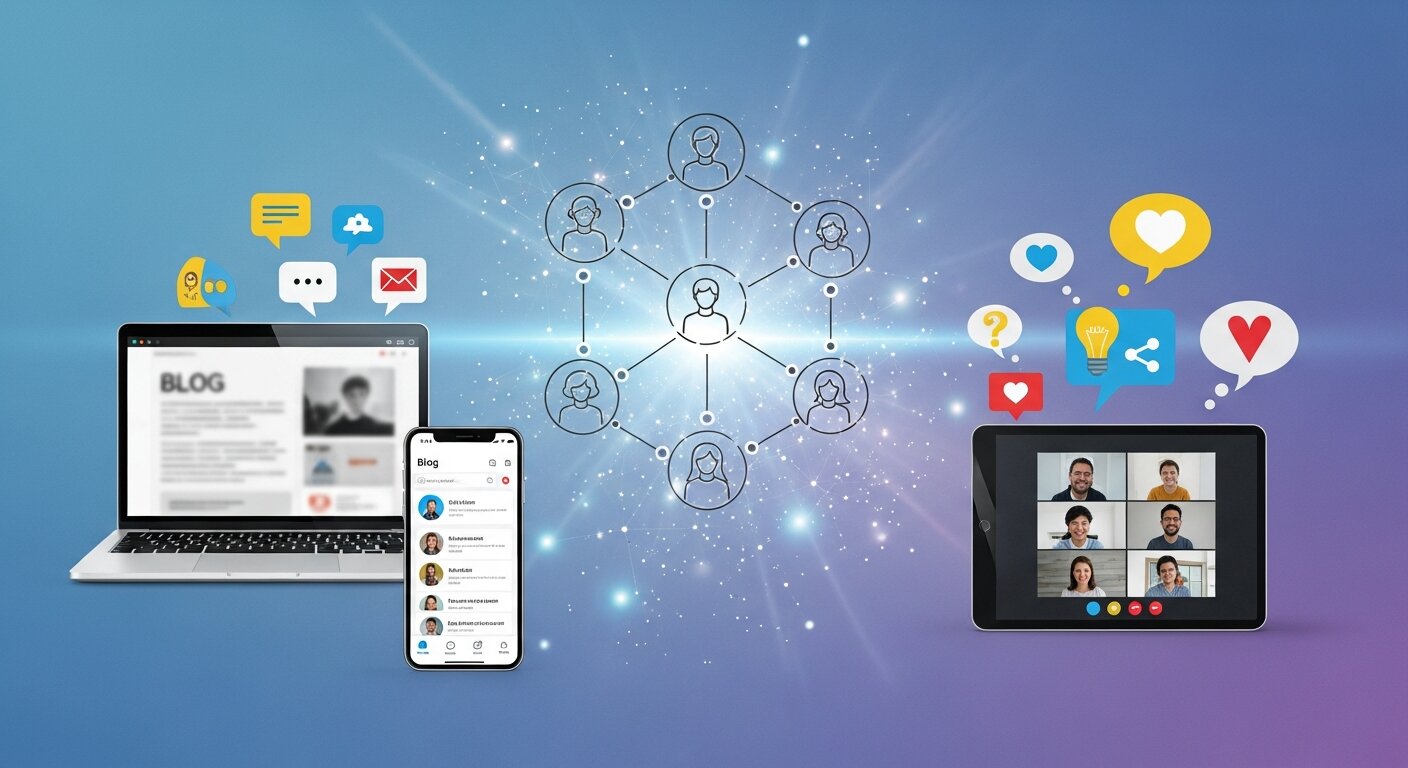
Human connection heavily relies on digital platforms. People use different communication tools in social networking to maintain friendships, build professional networks, and find communities of like-minded individuals. Understanding the exact mechanisms these platforms use to foster connections reveals a lot about modern digital interaction.
Many users wonder how blogs and social networking platforms actually manage relationships. The answer lies in the specific features and community-building mechanics embedded in these sites. From comment sections to direct messaging, every element is designed to keep users engaged with one another.
The Core Communication Tools in Social Networking
Platforms like Facebook, X, and Instagram rely on a variety of features to keep users talking. These platforms are essentially giant databases of user relationships, managed through interactive tools.
Direct Messaging and Private Chats
Direct messaging acts as the digital equivalent of a private conversation. This feature allows users to share thoughts, media, and links away from the public eye. Frequent use of private messages strongly correlates with closer real-world relationships. These tools help maintain a sense of intimacy even when people are continents apart.
Public Comments and Threaded Discussions
Public comment sections serve as digital town squares. When a user posts a photo or a status update, friends and followers leave comments. This creates a threaded discussion that others can join. Social media interaction for relationship growth often starts in these public arenas before moving to private channels.
How Blogging Improves Social Connections
While social media focuses on rapid, short-form interaction, blogs offer a deeper dive into personal thoughts and professional expertise. This long-form content creates a different type of bond between the creator and the audience.
Fostering Blog-Based Community Engagement
A well-maintained blog naturally gathers a specific audience. Readers who consistently return to read new posts often share similar interests. Bloggers encourage this blog-based community engagement by asking questions at the end of their posts and actively responding to comments. This transforms a static webpage into an active community hub.
Storytelling for Deeper Empathy
Blogs give writers the space to tell complete stories. Sharing personal struggles, triumphs, or detailed guides allows readers to see the human behind the screen. Using social networks for emotional connection often stems from this type of vulnerable, detailed storytelling. Readers feel they know the blogger, leading to strong parasocial relationships and tight-knit communities.
Strategies for Social Media Interaction for Relationship Growth
Simply having an account does not guarantee meaningful connections. Users and brands alike must employ specific strategies to nurture their digital ties.
Active Listening and Responsiveness
Good communication requires listening. On digital platforms, listening means reading comments, noting user preferences, and acknowledging feedback. Replying promptly to messages and comments shows that you value the other person’s input. This simple act is foundational to relationship management through online platforms.
Consistent and Authentic Posting
People connect with authenticity. Sharing a mix of polished achievements and real, everyday moments helps humanize your digital presence. When followers know what to expect and see genuine content, they are more likely to engage. Consistency keeps you top-of-mind, which is crucial for long-term relationship maintenance.
The Intersection of Blogging and Relationship Management
Blogging and relationship management overlap significantly when content creators use their platforms to network. A professional blog can attract industry peers, leading to collaborations, guest posts, and partnerships.
Bloggers often link to other creators, share their work on social channels, and participate in cross-promotional activities. These actions build a web of professional relationships. The blog acts as the central node, while social networking platforms serve as the distribution channels to reach a wider audience.
Mastering Authentic Online Relationships
We spend a massive portion of our daily lives looking at screens, typing messages, and scrolling through feeds. While some argue this digital existence isolates us, it actually presents an unprecedented opportunity to form meaningful bonds with people across the globe. The transition from physical town squares to digital networking platforms has fundamentally shifted how humans interact, but the core psychological need for connection remains exactly the same.
Learning how to build relationships online requires a different set of skills than striking up a conversation at a local coffee shop. You lack the immediate physical cues, the tone of voice, and the shared physical environment. However, internet-based social connections offer distinct advantages. You can find highly specific communities tailored to your exact interests, connect with industry leaders you would never meet in person, and maintain friendships across continents without paying for a plane ticket.
The Foundations of Digital Communication for Relationships
To understand how to connect with people online, you first need to grasp the medium. Text-based communication strips away body language and vocal inflection, meaning your words carry the entire weight of your intent.
Understanding Emotional Connection in Digital Communication
Creating an emotional connection in digital communication requires intentionality. When you cannot rely on a warm smile or a sympathetic nod, you must use language to demonstrate empathy and active listening. This involves asking open-ended questions and validating the other person’s experiences before rushing to share your own.
Sharing personal anecdotes, appropriately tailored to the context of the relationship, helps humanize your digital avatar. Vulnerability breeds trust, even over a Wi-Fi connection. When you admit a struggle or share a genuine triumph, you signal to the other person that you are authentic, prompting them to open up in return.
Choosing the Right Digital Networking Platforms
Not all social networks serve the same purpose. Your online networking strategies must adapt based on where you choose to spend your time. LinkedIn is designed for professional networking online, prioritizing career achievements and industry insights. Instagram and TikTok focus on visual storytelling, making them ideal for lifestyle and creative connections. Platforms like Discord and Reddit center around specific interests and hobbies.
Selecting the right platform ensures you are swimming in the right pool. If your goal is virtual friendship development, finding a niche community on Reddit or a dedicated Discord server will yield better results than randomly messaging people on professional sites.
How to Build Relationships Online
The mechanics of forming a bond through a screen involve a series of deliberate steps. You cannot simply wait for connections to happen; you must actively cultivate them.
Strategies for Virtual Friendship Development
Developing friendships online starts with shared interests. When engaging in online community interaction, look for individuals who consistently share thoughtful perspectives. Reply to their comments, add value to their observations, and slowly establish a familiar presence.
Once a baseline of familiarity exists, transition the conversation from public threads to private messages. This shift is crucial for relationship building through messaging apps. Start by referencing a topic you both recently discussed publicly. Keep the initial messages light, respectful, and focused on your shared interests. Over time, as you establish a rhythm, the conversation will naturally evolve into broader, more personal territories.
Mastering Professional Networking Online
Professional networking online demands a slightly different approach. Here, value exchange is often the primary driver of early interaction. To catch the attention of peers or mentors in your industry, you must offer something useful. This could be sharing their content with your own insightful commentary, pointing them toward a resource they might find helpful, or congratulating them on a recent milestone.
Avoid the common mistake of immediately asking for favors. Building trust in online relationships takes time, especially in a professional context. Focus on being a consistent, supportive presence in their network. Engage with their posts regularly, attend virtual events they host, and look for organic ways to collaborate.
Maintaining Relationships Through Social Media
Getting a connection is only the first step. The real work lies in online engagement and relationship growth over the long term.
The Art of Online Community Interaction
Communities thrive on active participation. If you want to maintain your internet-based social connections, you must show up consistently. This means answering questions, welcoming new members, and participating in group discussions. Your reputation within a digital space dictates the quality of relationships you can form there.
When interacting within a group setting, practice digital etiquette. Disagreements will happen, but handling them with respect and curiosity rather than hostility will elevate your standing. People gravitate toward calm, constructive voices in crowded digital rooms.
Relationship Building Through Messaging Apps
Direct messaging is the lifeblood of maintaining remote bonds. However, texting can easily become a chore if it lacks substance. To keep the momentum going, use multimedia. Send an interesting article, a funny video related to an inside joke, or a quick voice note. Voice notes are particularly powerful for injecting tone and personality back into the conversation, bridging the gap between text and face-to-face interaction.
Check in periodically without needing a specific reason. A simple message saying you saw something that reminded you of them shows that they exist in your thoughts outside of the digital space.
Essential Remote Relationship Building Tips
Whether you are managing a remote team, collaborating with international freelancers, or keeping in touch with a friend who moved away, specific tactics can help solidify your efforts.
Building Trust in Online Relationships
Trust is the foundation of any bond, and it is notoriously fragile on the internet. To build it, you must be reliable. If you say you will attend a virtual meeting, be there on time. If you promise to send a link, follow through promptly. Consistency in your actions proves that your digital persona aligns with your real-world character.
Transparency also plays a major role. Be honest about your intentions and your boundaries. If you are overwhelmed and need to step away from social media for a few days, communicate that to the people you talk to regularly. This prevents them from assuming you are ignoring them and shows respect for the connection.
Online Engagement and Relationship Growth
Stagnation is the enemy of connection. To foster growth, you must continuously find new ways to engage. Move beyond text whenever possible. Schedule a video call to catch up over coffee, play a multiplayer video game together, or use watch-party features to view a movie simultaneously. Shared experiences, even virtual ones, create memories that anchor the relationship.
Celebrate their wins publicly and privately. When someone in your network achieves a goal, be the first to congratulate them. Acknowledging their success reinforces that you are a supportive ally in their corner.
The Role of Algorithms in Shaping Relationships
Modern social networking platforms are not neutral spaces. Behind every feed lies a complex algorithm that determines what content you see and who you interact with most frequently.
Algorithms prioritize engagement—posts that generate likes, comments, and shares. As a result, you are more likely to see content from people you already interact with often, while quieter connections gradually disappear from your feed. This creates a filtered version of your social world.
Over time, this algorithmic curation can reshape relationships. You may feel closer to someone simply because their posts appear more often, not necessarily because your bond is stronger. At the same time, meaningful relationships can weaken due to lack of visibility rather than lack of care.
Understanding this dynamic helps you take control. Actively visiting profiles, sending messages, and engaging intentionally ensures that important relationships are not left at the mercy of algorithms.
Digital Boundaries and Relationship Health
Constant connectivity can blur the boundaries between personal space and social interaction. Unlike traditional communication, social networking creates an expectation of immediate availability.
Without clear boundaries, this can lead to emotional fatigue. Feeling pressured to reply instantly, stay updated, or remain constantly active can strain even strong relationships.
Setting digital boundaries is essential for maintaining healthy connections. This includes:
- Defining screen-free times (meals, family time, sleep hours)
- Managing notification settings to reduce distractions
- Being transparent about response times
Healthy relationships thrive on respect for time and space. When both parties understand and honor these boundaries, interactions become more meaningful rather than overwhelming.
The Rise of Parasocial Relationships
Social networking has given rise to parasocial relationships—one-sided connections where individuals feel emotionally attached to someone who does not know them personally, such as influencers, bloggers, or content creators.
These relationships are built through consistent exposure to personal content. When creators share their lives, thoughts, and experiences, audiences begin to feel a sense of familiarity and closeness.
While parasocial relationships can provide comfort and inspiration, they can also distort expectations of real-world connections. Unlike mutual relationships, these bonds lack reciprocity, which can lead to unrealistic emotional investment.
Maintaining awareness is key. Enjoying content and feeling inspired is healthy, but balancing it with real, two-way relationships ensures emotional well-being.
The Future of Social Networking and Human Connection

Social networking continues to evolve rapidly, and its influence on relationships will only deepen. Emerging technologies like virtual reality (VR), augmented reality (AR), and AI-driven interactions are set to redefine how we connect.
Future platforms may simulate face-to-face interactions more closely, reducing the limitations of text-based communication. Virtual spaces could allow people to “meet” and interact in immersive environments, making long-distance relationships feel more tangible.
However, the core challenge will remain the same: balancing convenience with authenticity. Technology can enhance connection, but it cannot replace genuine emotional effort.
The future of relationships will depend not just on innovation, but on how consciously individuals choose to use these tools. Those who prioritize empathy, presence, and intentional communication will continue to build meaningful connections—regardless of the medium.
FAQs
1. How does social networking affect relationships?
Social networking affects relationships by changing communication patterns, reducing face-to-face interaction, and increasing both connection and misunderstandings.
2. Can social media improve relationships?
Yes, when used actively and intentionally, social media can strengthen relationships by maintaining communication and building emotional connections.
3. What is the biggest negative impact of social media on relationships?
The biggest negative impact is reduced quality of interaction, including superficial communication, jealousy, and misinterpretation of messages.
4. What is “phubbing” in relationships?
Phubbing refers to ignoring someone in favor of using a mobile phone, which can damage trust and emotional connection.
5. How do algorithms influence social relationships?
Algorithms control what content you see, which can strengthen some connections while weakening others due to reduced visibility.
6. What are parasocial relationships?
Parasocial relationships are one-sided emotional connections with influencers or public figures who are unaware of the individual.
7. How can I build meaningful relationships online?
You can build meaningful relationships online by engaging actively, communicating authentically, and maintaining consistent interaction.
8. Does social media cause loneliness?
Excessive passive use of social media is linked to increased loneliness, especially due to social comparison and lack of real interaction.
9. How can digital boundaries improve relationships?
Digital boundaries reduce stress, improve communication quality, and help maintain a healthy balance between online and offline life.
10. What is the future of social networking in relationships?
The future includes immersive technologies like VR and AI, which may enhance connection but still require human authenticity to sustain relationships.



Leave a Reply